Why Be Driven Napier to Wellington: The Case Against Doing It Yourself
Napier to Wellington looks simple on paper. The reality—SH2's tight curves, fatigue zones, and rental logistics—makes a strong case for being driven.
The Napier to Wellington route looks deceptively simple on a map. State Highway 2 threads down the east coast for 330 kilometres, connecting two of New Zealand's most elegant cities through wine country, farming plains, and the Wairarapa. It's marked as a major arterial. Google suggests five hours. Rental car companies will happily hand you keys at Napier Airport.
But talk to anyone who's actually driven it—particularly southbound, particularly after a long-haul flight or a few days in Hawke's Bay—and you'll hear a different story. This is a route that starts easy and accumulates difficulty. The kind where you arrive functional but depleted, having spent cognitive reserves you didn't budget for.
There's a legitimate case for being driven instead. Not for everyone, not always, but for certain trip profiles the mathematics shift decisively. Here's why.
The Route Reality: SH2 Is Not SH1
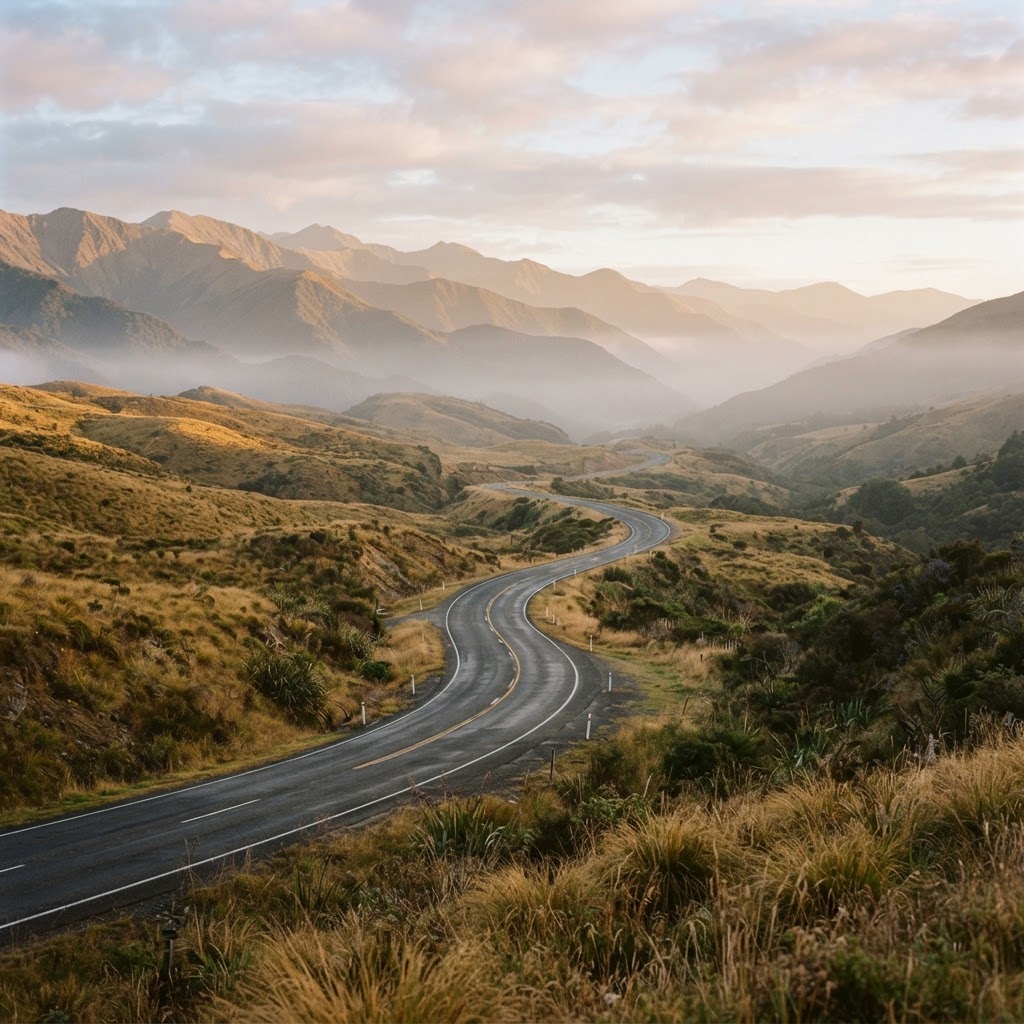
State Highway 2 between Napier and Wellington doesn't behave like the main trunk routes most international visitors picture. There are no motorway sections. Almost the entire distance is single-lane each direction, often with passing lanes that appear and vanish every 15–20 kilometres.
The first 90 minutes through southern Hawke's Bay—Hastings, Waipukurau, Dannevirke—move predictably. Wide farming valleys, gentle grades, reliable passing opportunities. But after Woodville the character changes. The road begins its crossing of the Manawatū Gorge alternative route (the original gorge road closed permanently in 2017), then climbs toward the Wairarapa via the Pahīatua Track.
These sections are technical. Tight radius corners, significant elevation changes, narrow lanes with minimal shoulder. Logging trucks use this corridor heavily. In rain—common on the western Wairarapa ranges—visibility drops and road spray becomes a factor. You don't need advanced driving skills, but you do need to be alert, rested, and comfortable with New Zealand rural road conventions.
The final 90 minutes from Masterton to Wellington introduces a different problem: the Rimutaka Hill Road. This 16-kilometre climb and descent over the Rimutaka ranges is one of the few genuinely demanding sections of state highway that visitors can't easily avoid. Steep grades (up to 1 in 14), hairpin bends, and sudden wind exposure at the summit. It's manageable, but it's also the point in the journey—four hours in—where fatigue begins to matter.
Then you arrive in Wellington, a city built on hills with confusing one-way systems, and you're expected to navigate to an inner-suburb Airbnb or return a rental car to the airport while circling for parking. This is the detail the five-hour estimate doesn't capture.
When the Rental Math Stops Working
Rental cars in New Zealand are priced on the assumption you'll do multiple days and cover significant distance. For a Napier–Wellington one-way transfer, the economics become strange.
You'll typically pay a base day rate plus a one-way drop fee (often $150–250 NZD, depending on vehicle class and company). Add fuel, and you're looking at $300–400 total for what is functionally a five-to-six-hour task. If you're staying in central Wellington without a car, you've now paid to drive yourself tired and then immediately relinquished the vehicle.
Compare that to being driven: door-to-door in a late-model vehicle, no navigation, no fuel stops, no delivery logistics. For a couple or small group, the per-person difference narrows quickly, especially once you factor in the time value of being able to work, rest, or simply watch the Wairarapa unfold without also needing to watch the road.
The real test isn't cost—it's opportunity cost. If you're arriving from a Hawke's Bay lodge stay and heading to a Wellington hotel before an international departure, spending half a day behind the wheel isn't neutral. It's a choice to subtract hours you could spend differently.
The Fatigue Window: Why Southbound Is Harder
There's an asymmetry to this route that doesn't show on maps. Northbound—Wellington to Napier—you tackle the Rimutaka ranges early, while fresh, and finish in the wide-open Hawke's Bay with energy to spare. Southbound, you save the technical driving for hour four and five, exactly when attention spans fray.
This matters especially if you're coming off a travel sequence: international flight to Auckland, connection to Napier, a few nights in the Bay, then this drive. By the time you're on SH2, you're not starting fresh—you're at the tail end of a journey, and the Rimutaka Hill becomes a cognitive tax you didn't anticipate.
Professional drivers know this. They'll time the route to avoid the Masterton commuter pulse, suggest a coffee stop in Greytown (not just for the flat white, but because 30 minutes off the road resets alertness), and handle the Wellington approach during afternoon light when the city's topography is easier to read.
You arrive composed. That has value, especially if the evening involves a restaurant booking or a morning flight you can't afford to scramble for.
When Being Driven Makes Sense
Not everyone needs this. If you're under 40, well-rested, comfortable with New Zealand roads, and treating the drive itself as part of the experience—the case is weak. Rent the car, take your time, stop where you like.
But the profile that benefits is common:
- International visitors linking a Hawke's Bay wine trip to a Wellington departure, already managing luggage, jetlag, and unfamiliar roads
- Older travelers or couples for whom five hours of concentrated rural driving isn't relaxing—it's work
- Business travelers who'd rather use the transfer time for calls, prep, or sleep
- Anyone arriving or departing via flight who doesn't want the rental pickup/dropoff choreography on both ends
It's also worth considering if you're traveling as a group. A private transfer splits across three or four passengers very differently than it does solo. The per-person cost often lands somewhere between rental and flying (Air NZ's Napier–Wellington route exists but requires check-in, security, and ground transport on both ends—sometimes the slower option once you account for terminal time).
The Wairarapa Advantage
One underrated element of being driven: your driver can make the Napier to Wellington route actively interesting instead of merely navigable. The Wairarapa—Martinborough, Greytown, Featherston—is some of New Zealand's most charming country, but if you're focused on the road you'll miss most of it.
A good driver knows where light hits the Tararua ranges at 3pm, which olive grove has the farm shop worth stopping at, and how to read whether the Pinnacles are visible from the Rimutaka summit (they usually aren't, but when they are, it's worth pausing). These aren't tourist stops—they're the texture that turns a transfer into something you remember.
This only works if you're not also navigating, watching your speed through road-work zones, or calculating whether you have enough fuel to skip Carterton.
The Soft Logic
There's no hard rule here. Plenty of people drive Napier to Wellington without incident, and some actively enjoy it. But the case for being driven isn't about ability—it's about whether the drive serves your trip or taxes it.
If you're stitching together a New Zealand itinerary that includes Hawke's Bay and Wellington, the transfer between them isn't decorative. It's five hours through demanding country at a point in your journey when energy matters. Choosing to be driven isn't about luxury—it's about recognizing that how you move between places shapes what you're capable of when you arrive.
If this resonates, it's worth getting a quote. The Wellington to Napier route works both directions, and knowing the exact cost lets you weigh it against the rental math with real numbers. Sometimes the answer surprises you.
About the Author

Sarah Tane
North Island Specialist & Lodge Liaison
Sarah has driven every major North Island corridor multiple times, usually with a lodge check-in time to meet. She writes about the routes most travellers navigate once—and the details that matter when you do.