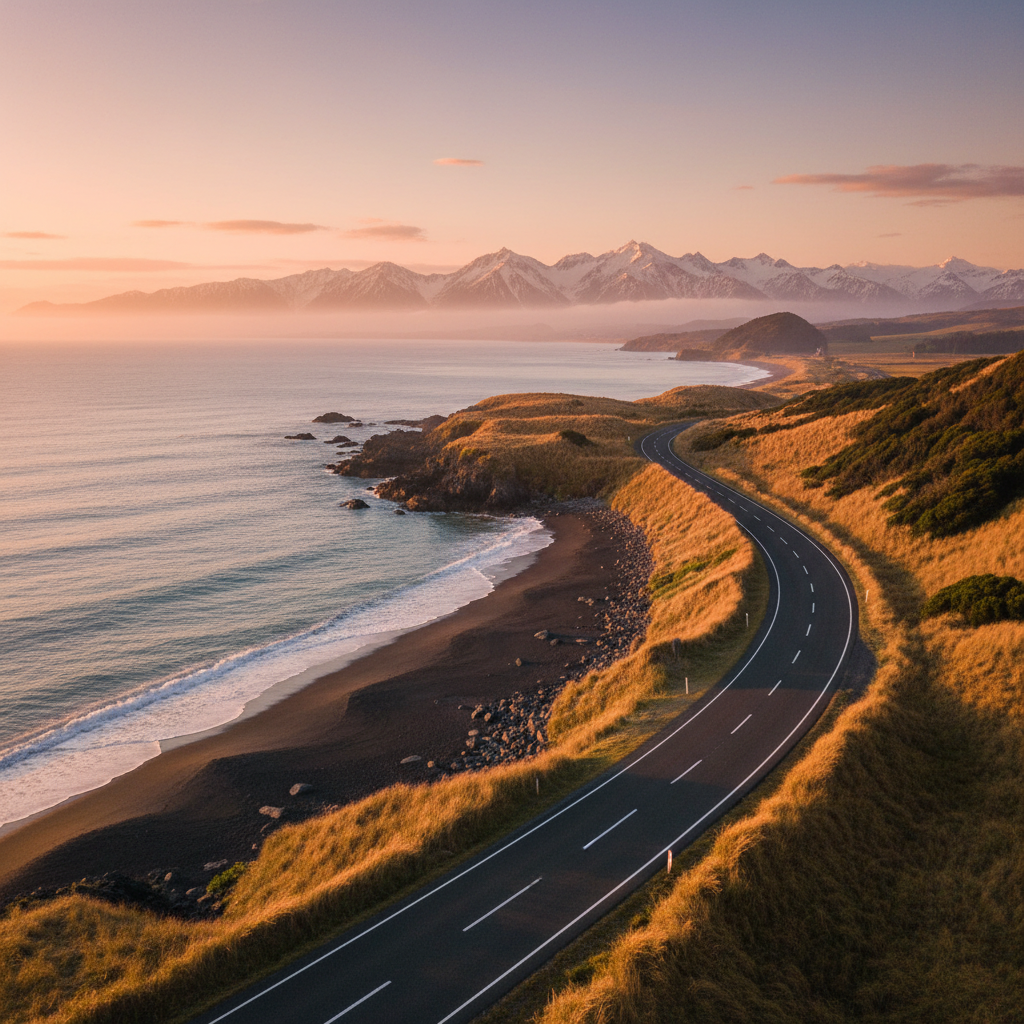
Wharekauhau to Wellington Private Transfer: The Wairarapa Coast Return
Wharekauhau to Wellington transfer via Palliser Bay or Rimutaka—90 minutes, two routes. What works for lodge departures and Wellington connections.
The Wharekauhau to Wellington transfer sits in an unusual category: too far to feel quick, too close to justify complexity, and entirely dependent on what happens at either end of your stay. This is the corridor that separates Wairarapa's pastoral isolation from Wellington's urban density, and how you bridge it determines whether your lodge departure feels seamless or friction-filled.
Most guests at Wharekauhau Country Estate arrive by helicopter or private transfer. The return journey to Wellington—whether to the airport, the city, or the Interislander terminal—covers roughly 90 minutes and 85 kilometres, but the route choice and timing dictate whether you arrive relaxed or rushed.
The Two Routes: Coast Versus Range
From Wharekauhau's gates on Wharekauhau Road, you're already committed to 12 kilometres of gravel before reaching Lake Ferry Road and sealed tarmac. The question is which way to Wellington.
The coastal route follows SH53 north to Martinborough, then picks up SH2 through Featherston and over the Rimutaka Range via the Rimutaka Hill Road. Total distance: 120 kilometres, approximately 100 minutes in good conditions. This is the scenic option—vineyards give way to the Remutaka Forest Park, the road climbs through regenerating bush, and the summit descent into the Hutt Valley is sharp and winding. It's also the route most vulnerable to weather. Fog on the hill, ice in winter, or heavy rain can add 20 minutes or close the road entirely.
The direct route retraces the coast toward Palliser Bay, cuts inland at Lake Ferry, and connects to SH53 east of Martinborough before following the same SH2 trajectory over the Rimutakas. This shaves minimal distance but adds gravel time and feels less intuitive. Most drivers default to the Martinborough corridor unless there's a specific reason to stay coastal longer—a vineyard stop, a breakfast booking at Poppies Martinborough, or simply more time.
Neither route avoids the Rimutaka Range. That crossing is your pinch point.
The Timing Problem: Flights, Ferries, and Downtown Arrivals
Wharekauhau checkout is typically 11am. Wellington Airport is 85 kilometres and 90 minutes away via the Rimutakas and the Hutt Valley motorway. If you're catching a flight, anything departing before 1:30pm requires an early exit from the lodge—7:30am for a 10am departure, earlier if you're connecting domestically to Christchurch or Queenstown.
The ferry terminal at Wellington Harbour adds another 10 minutes past the airport, depending on traffic through Miramar and the city. The Interislander and Bluebridge sailings to Picton depart from different wharves but sit within five minutes of each other. A noon sailing means leaving Wharekauhau by 9:30am, factoring in check-in windows and vehicle queuing for foot passengers with luggage.
Downtown Wellington—hotels on The Terrace, corporate offices near the Beehive, or apartments in Te Aro—sit 95 kilometres from the lodge. The drive time holds at 90 minutes, but Wellington's one-way systems and parking realities mean your arrival point matters. If you're being dropped at the InterContinental or QT Wellington, street access is straightforward. If you're heading to a private address in Oriental Bay or Kelburn, access narrows quickly.
The return-leg arithmetic rarely favors self-drive here. Rental car depots in Wellington cluster at the airport, meaning an 11am Wharekauhau departure puts you at the Avis counter by 12:30pm with half a day burned and no flexibility. If you rented in Wellington to drive out to Wharekauhau, you've added a navigation learning curve, gravel anxiety, and the dead time of airport shuttle buses at both ends.
What Private Transfer Solves (and What It Doesn't)
A private transfer from Wharekauhau to Wellington removes three friction points: gravel management, timing buffer, and return-leg deadweight.
The gravel section from Wharekauhau to Lake Ferry Road is benign in a lodge vehicle but nerve-testing in a budget rental sedan. Washboard, potholes after rain, and dust in summer all register differently when you're responsible for the car. A private driver treats it as expected terrain, adjusts speed without drama, and carries the vehicle risk.
The timing buffer matters more than most guests anticipate. Flight delays, ferry cancellations, or simply wanting an extra hour at the lodge breakfast table—all become possible when your driver adjusts the departure window rather than adhering to a fixed rental return slot. If your Wellington flight pushes from 1pm to 3pm, a private transfer adjusts. A rental car sits in the airport carpark accruing penalty hours.
Return-leg deadweight is the hidden cost. If you've flown into Wellington, rented a car, driven to Wharekauhau for two nights, and now face the return, you're paying for a vehicle that sat stationary at the lodge for 48 hours. That's $200–$300 in rental fees for approximately three hours of actual driving. A private transfer costs more per hour but eliminates the static cost.
What private transfer doesn't solve: spontaneous stops. If you want to linger at Martinborough vineyards, detour to Cape Palliser for the seal colony, or pause at the Putangirua Pinnacles, a rental car offers autonomy a transfer doesn't. The corridor is short enough that spontaneity has value—if your schedule permits it.
The Wet-Weather and Winter Reality
The Rimutaka Hill Road is State Highway 2's Achilles heel. In winter, it closes for ice. In heavy rain, it slows to crawling convoys behind cautious drivers. In fog, it disappears entirely. There is no alternate route that doesn't add an hour.
Departure-day weather checks are non-negotiable. If the summit forecast shows snow or freezing temperatures, your 90-minute estimate becomes 120 minutes, minimum. If the road is closed, you're rerouting north through the Wairarapa to Pahiatua and approaching Wellington from the Manawatu—a 200-kilometre detour that turns 90 minutes into three hours.
Private drivers monitor this daily. Rental customers often don't know to check until they're halfway up the hill in second gear behind a logging truck.
The Lodge-to-City Corridor as a Return-Leg Template
The Wharekauhau-Wellington corridor is one of New Zealand's clearest examples of return-leg asymmetry. The outbound journey—Wellington to Wharekauhau—feels like arrival, discovery, transition into luxury. The return feels like logistics. You've had your lodge experience. Now you need to be at the airport, the ferry, or the city, on time, without drama.
This is where private transfer value concentrates. Not in the scenery or the experience—the route is handsome but not transcendent—but in the removal of cognitive load at the end of a stay when you'd rather not think about gravel, weather, fuel stops, or rental return queues.
For guests extending south to Wharekauhau to Martinborough for wine tastings before departing, a private driver allows multi-stop itineraries without backtracking. For those connecting to the ferry for South Island legs—particularly Wellington to Marlborough wine estates—the seamless handoff from lodge to terminal removes a tight connection point.
If you're departing Wharekauhau for Wellington and the return leg feels like an afterthought you'd rather not manage yourself, that's the signal. Get a quote and let someone else handle the gravel, the hill, and the arrival timing while you finish your coffee on the lodge terrace.
Marcus Reid Based in Queenstown
Marcus specialises in return-leg logistics and remote lodge access across the South Island. He writes about the travel arithmetic most operators don't discuss.
About the Author

Marcus Reid
Queenstown & Fiordland Route Driver
Marcus has driven every permutation of Central Otago's highway network over fifteen years guiding and logistics work. He writes about South Island routes with particular attention to return-leg economics and terrain.