South Island Winter Driving: What You Need to Know About Snow, Chains, and Alpine Passes
South Island winter driving requires snow chains, alpine pass knowledge, and proper preparation. Essential guide to SH6, Crown Range, and Lindis Pass conditions.
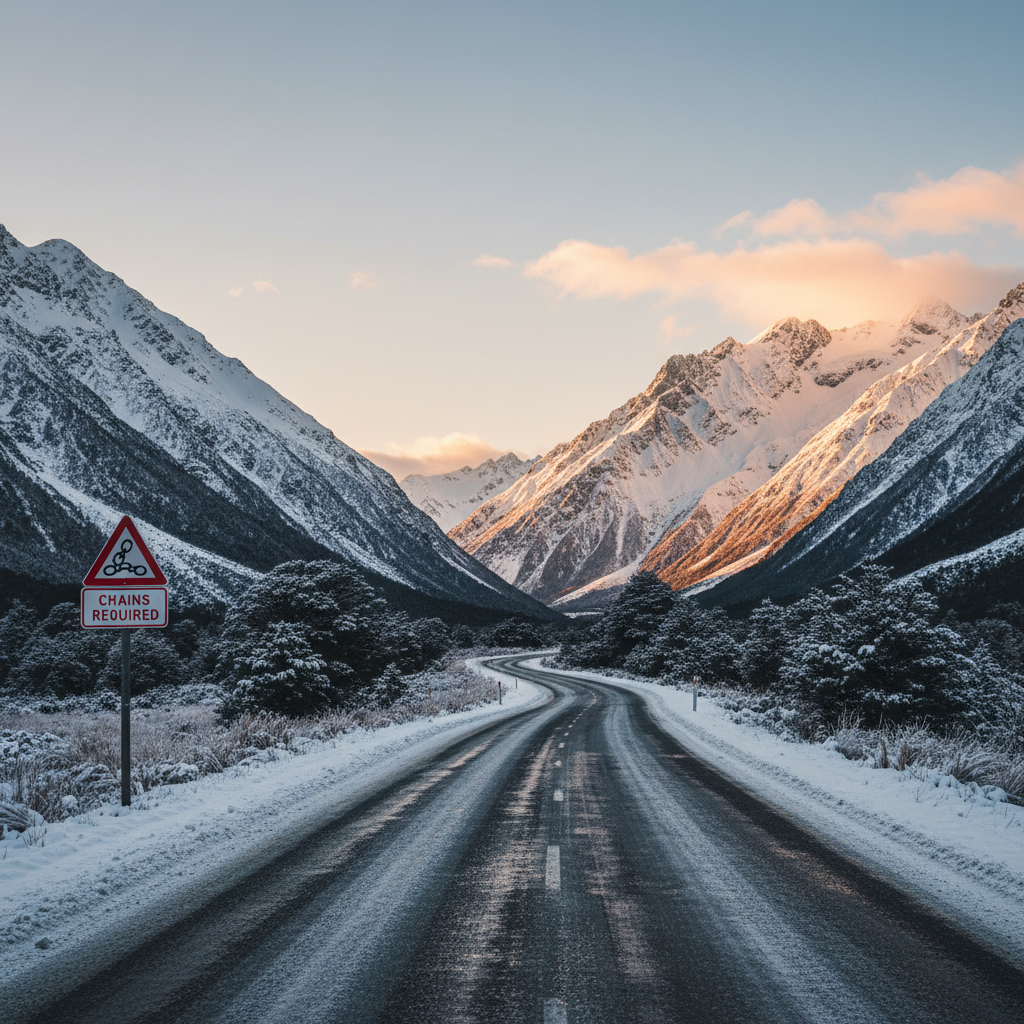
The South Island in winter is spectacular—and genuinely hazardous if you're unprepared. Most international visitors underestimate how quickly conditions change on alpine passes, how strictly chain regulations are enforced, and how few fuel stops exist between Queenstown and the West Coast. This isn't Scandinavia with armoured highways. New Zealand's mountain roads are narrow, remote, and unforgiving when weather turns.
If you're driving yourself between June and September, you need specific knowledge about chain-carrying requirements, pass closure patterns, and vehicle capability. If that sounds less like a holiday and more like logistics, there's a reason private transfer services between Queenstown and Wanaka or Christchurch to Mount Cook exist—drivers who do these routes year-round with chains fitted, NZTA alerts monitored, and alternative routing already planned.
The Alpine Passes That Require Chains
Crown Range Road (SH89) between Queenstown and Wanaka is New Zealand's highest sealed public road at 1,076 metres. It closes frequently in winter—sometimes for days—and when open, chains must be carried between May and October regardless of conditions. NZTA enforcement is real. Rangers check vehicles at both ends, and fines start at $150.
The road itself is stunning: eleven kilometres of switchbacks with no barrier rails and 300-metre drops. In snow, visibility drops to twenty metres. There's no cellphone coverage for most of the route. Rental cars are explicitly prohibited from using Crown Range by most companies, though enforcement is patchy until something goes wrong and insurance becomes the issue.
Lindis Pass (SH8) between Cromwell and Omarama sits at 971 metres and catches people by surprise. It looks benign from Cromwell—golden tussock and long sight lines—but the summit plateau creates its own weather system. Black ice forms in shaded corners even when the forecast says clear. Chain-carrying is required in winter, and the pass closes multiple times each season.
Arthur's Pass (SH73) across the Southern Alps between Christchurch and Greymouth is the most reliable winter route—which still means closures after heavy snow. The road climbs to 920 metres through beech forest and scree, with avalanche zones actively managed by NZTA. Chains are compulsory when snow warnings are active, and that's often. The Christchurch-to-Greymouth drive is six hours in summer; allow eight in winter, and check conditions at 6am before you leave.
Haast Pass (SH6) is lower at 563 metres but longer—the climb from Makarora to the Gates of Haast is 146 kilometres of alpine terrain with services only at Makarora (café, toilet) and nothing else. Heavy snow is less common than Arthur's, but when it hits, you're extremely remote. This is the route to the West Coast glaciers, and in winter it demands respect.
What "Chain-Carrying Required" Actually Means
New Zealand doesn't use winter tyres as standard. Rental cars come with all-season radials, which are marginal in snow and dangerous on ice. When NZTA posts "chain-carrying required," it means:
- You must have chains in the vehicle that fit your tyres
- You must know how to fit them (pulled over, in snow, possibly dark)
- Enforcement occurs at checkpoints before the pass
- Ignoring the requirement voids your rental insurance
Chains cost $80-120 to buy in Queenstown or Wanaka (less in Christchurch). Rental companies charge $25-40/day to add them, but many won't rent them for Crown Range use. Fitting them the first time takes fifteen minutes in a carpark. In roadside snow with frozen fingers, it takes longer.
Most visitors fit chains once, drive five kilometres at 30 km/h, then remove them when conditions improve—which means fitting them again an hour later when the next snow band arrives. It's tedious, cold work. The alternative is waiting at the base of the pass until conditions improve, which might be tomorrow.
Real-Time Condition Monitoring
NZTA's Journey Planner (journeys.nzta.govt.nz) is the only official source. It updates alpine pass status hourly during active weather. "Open—chains recommended" means chains are optional but wise. "Open—chains required" means mandatory. "Closed" means closed—no exceptions, no negotiation.
Local Facebook groups (Crown Range Road Conditions, Lindis Pass Updates) often post faster than NZTA, with photos from drivers who've just crossed. MetService's mountain forecasts cover the ranges but not specific passes—you need both sources.
The pattern most visitors miss: passes often close overnight (8pm-6am) even when daytime conditions are fine, because NZTA won't commit graders and safety patrols after dark. That means if you're driving Queenstown to Christchurch via Lindis and you don't leave by 3pm, you may be staying in Cromwell whether you planned to or not.
Fuel, Food, and Phone Coverage
State Highway 6 from Queenstown to Franz Josef is 471 kilometres. Fuel stops: Queenstown, Cromwell, Wanaka, Makarora (unreliable hours), Haast (expensive), Fox Glacier, Franz Josef. If you skip Makarora and Haast is closed (happens), you're looking at 290 kilometres between Wanaka and Fox—beyond the range of most rental sedans on a half tank.
Mobile coverage is sparse. Spark and Vodafone work in towns and occasionally on valley floors, but there's no coverage on Crown Range summit, Lindis Pass summit, most of Haast Pass, or the 50-kilometre stretch between Makarora and Haast township. If you slide off the road, you may wait hours before another vehicle appears.
Winter daylight is short. Sunrise around 8am, sunset by 5:30pm in July. That six-hour Christchurch-Greymouth drive needs to start by 9am to avoid finishing in the dark. Arthur's Pass in the dark, in snow, with no phone coverage and no barrier rails, is not the adventure most people are seeking.
When a Driver Makes More Sense Than a Rental
There's a reason private transfers handle a significant share of South Island winter logistics between high-end lodges. The math isn't just about convenience—it's about risk offloading. A Queenstown to Christchurch transfer with a professional driver means:
- Someone else monitors NZTA alerts and adjusts route or timing
- Chains already onboard, fitted in minutes by someone who does it weekly
- Alternative routes planned (SH6 via West Coast if SH8 closes)
- Phone contact with lodges if delays occur
- No insurance excess if conditions turn bad
The cost delta between three days of rental ($180), chains ($35/day), fuel ($200), and a private transfer ($950-1,200 depending on route) narrows significantly when you factor in time, stress, and the actual likelihood you'll enjoy driving Lindis Pass in a whiteout.
For routes like Christchurch to Aoraki Mount Cook—which involves SH8 over Burkes Pass in winter—the transfer model is common enough that lodges actively suggest it during booking.
If You're Driving Yourself: The Checklist
If the plan remains self-drive, here's the non-negotiable preparation:
- Check NZTA Journey Planner at 6am on day of travel
- Carry chains that fit your vehicle, and practice fitting them in daylight before you need them in snow
- Full tank before leaving any town with a fuel station
- Emergency kit: blanket, water, snacks, torch, phone charger
- Allow 50% extra time—the 90-minute Queenstown-Wanaka trip becomes three hours in snow
- Have a backup plan—if Crown Range closes, the alternative via SH6 adds 120 kilometres and two hours
Don't rely on "it'll be fine"—South Island winter conditions have stranded experienced Kiwis, not just visitors. The landscape doesn't care about your Milford Sound booking tomorrow.
Winter in the South Island is extraordinary if you're prepared for the reality of alpine driving. If that preparation sounds more involved than you'd prefer on holiday, a quick conversation through LandFlight's quote system will outline what a professional driver costs for your specific route—often less than the mental overhead of doing it yourself in snow.
About the Author

James Whitfield
Senior Driver & South Island Route Specialist
James has driven every major South Island route for the past twelve years, specialising in alpine access and terrain logistics. He advises on winter transfers and lodge positioning across Canterbury and Otago.