Queenstown to Blanket Bay: The Route Most Travellers Get Wrong
Queenstown to Blanket Bay transfer options: why the scenic two-day route via Te Anau beats the helicopter for some guests. Drive times, road conditions, logistics.
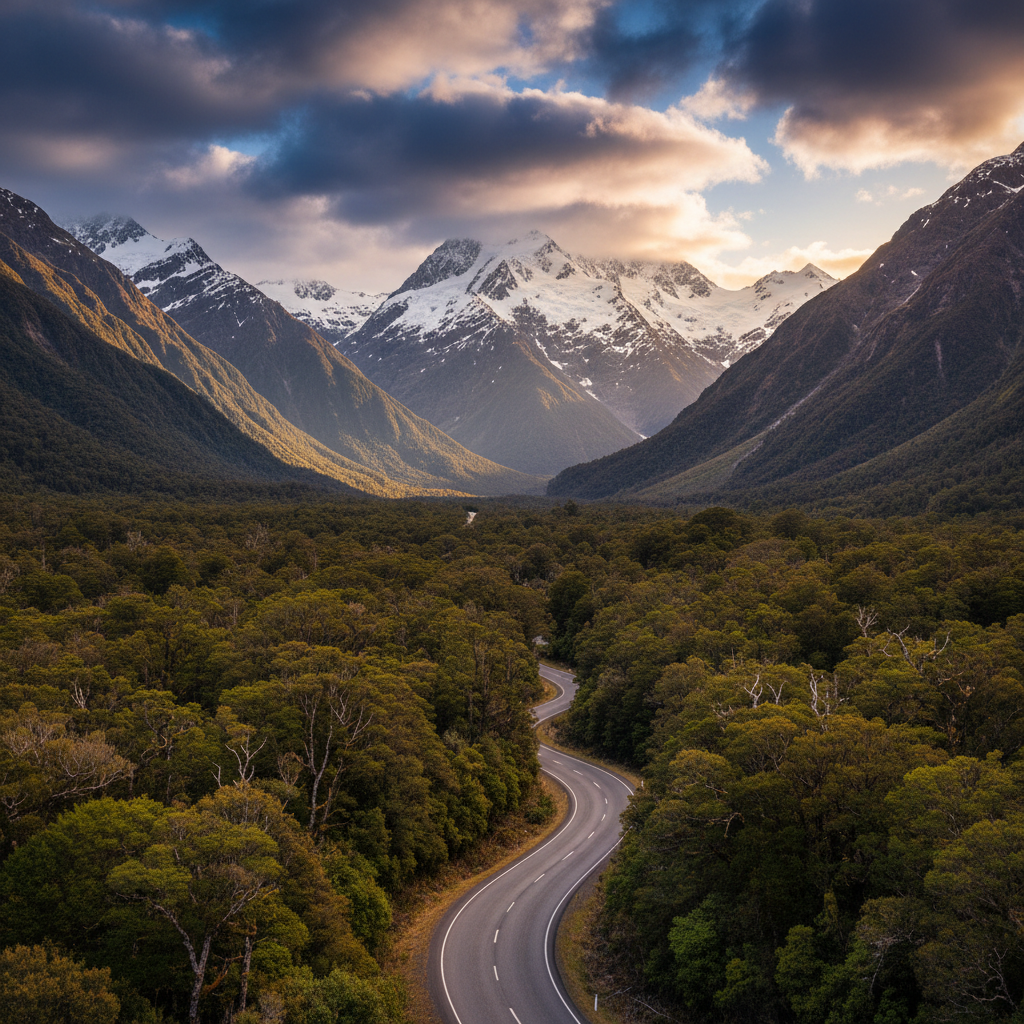
Blanket Bay sits on the northern shore of Lake Wakatipu, forty-five minutes past Glenorchy on a road that deteriorates from seal to gravel at Paradise. Most guests arriving from Queenstown make one of two mistakes: they assume the direct route is best, or they book the helicopter without understanding what they're trading away.
The Queenstown to Blanket Bay transfer isn't complex, but it requires decisions most concierge teams don't explain properly. This is the breakdown, including the option almost nobody considers.
The Glenorchy Route: Short Distance, Long Complications
The direct route measures 78 kilometres from Queenstown Airport to Blanket Bay's gate. You follow the lake edge through Closeburn and Bennetts Bluff—stunning views, narrow shoulders, tourist traffic in rental Suzukis stopping mid-corner for photos. Glenorchy arrives at the 46-kilometre mark, the last fuel and the last proper coffee.
Beyond Glenorchy, the sealed road ends within fifteen minutes. The Glenorchy-Paradise Road turns to maintained gravel, single-lane in sections, with blind corners and rental vehicles driven by passengers reading maps. Your lodge transfer won't be in a rental sedan. It'll be in something appropriate for the surface, but the road still dictates the pace.
Drive time Queenstown to Blanket Bay via Glenorchy: 90 to 110 minutes in good conditions. Add thirty minutes if it rained overnight or if you're behind a campervan convoy with nowhere to pass.
The return leg is where this route becomes a conversation. If you're flying out of Queenstown, your driver leaves Blanket Bay at 06:00 to make an 09:30 flight. The lodge knows this. They'll pack you breakfast. It works, but it carves two hours from your final morning, and Blanket Bay mornings are what you're paying for.
The Helicopter: Fast, Expensive, Weather-Dependent
Queenstown helicopters quote $1,800 to $2,400 one-way for Blanket Bay, depending on aircraft type and whether you're sharing the charter. Flight time is eleven minutes. You'll spend longer on the pre-flight safety briefing than you will in the air.
Three limitations worth noting:
Weather holds. Fiordland weather moves fast. The Glenorchy corridor can be clear while Blanket Bay sits under a low ceiling that grounds everything. Helicopter operators won't commit to a hard departure time more than two hours out. If you've got an international connection from Queenstown or Christchurch, that uncertainty becomes expensive.
Luggage limits. Most Blanket Bay guests travel with more than a 15-kilogram soft bag. Helicopters charge by weight, and rigids incur surcharges or require a second flight.
No roadside context. You lift off, cross the lake, land at the lodge jetty. It's spectacular, it's fast, and you arrive with no sense of where you actually are in relation to the rest of Fiordland. For some guests that's irrelevant. For others—especially those planning walks or day excursions—it's disorienting.
The Scenic Alternative: Te Anau to Glenorchy (Two Days)
The route that makes sense for specific guests: Queenstown to Te Anau (172km), overnight at Te Anau, then Te Anau to Glenorchy (168km) via Kingston, then Glenorchy to Blanket Bay (32km).
This is a two-day journey with a planned stop, treating the transfer as part of the itinerary rather than dead time between destinations. You take SH6 south to Kingston, then SH94 through Mossburn to Te Anau—open farmland, Lake Wakatipu's southern basin, the Eyre Mountains rising to the west. You break at Fiordland Lodge or Radfords on the Lake in Te Anau, spend the afternoon walking the lakeshore or taking the glowworm caves cruise, then complete the second leg the following morning.
Total drive time across two days: five to six hours. You've seen the lake systems and the transition from Southland plains to subalpine country, and you arrive at Blanket Bay with geographic context and without the fatigue of a single-day push.
This option works for guests who don't view transfers as interruptions. It works especially well on the return leg. Departing Blanket Bay early, overnighting in Te Anau, then continuing to Queenstown or Christchurch the next day turns a logistical problem into a Southland traverse.
What the Numbers Actually Say
Standard Glenorchy route (78km): $420–$580 private transfer, 90–110 minutes, road-dependent.
Helicopter (direct): $1,800–$2,400, 11 minutes flight time, weather-dependent, luggage limits.
Two-day route via Te Anau: Two transfer legs plus one night accommodation, total cost $950–$1,400 depending on lodge choice, includes the Te Anau lakefront and Fiordland gateway scenery.
Most Blanket Bay guests choose Glenorchy or helicopter. The two-day option gets picked by guests extending their South Island itinerary or building in contingency against weather on either end.
The Return Leg Problem Nobody Mentions
Blanket Bay checkout is typically 11:00. If you're flying internationally from Queenstown that afternoon, the Glenorchy route gives you a 12:30–13:00 airport arrival. Workable for a 15:00 or later departure. Tight for anything earlier.
The helicopter solves this, but only if weather cooperates on your specific departure morning. The two-day route solves it by removing the same-day constraint entirely.
Consider your outbound and return legs together, not as separate bookings. The optimum answer is often asymmetric: helicopter in, road transfer out with a Te Anau night, or vice versa.
If you're weighing options for a Queenstown to Glenorchy leg or planning a wider Fiordland loop that includes Queenstown to Te Anau, the math changes when you factor lodge timing, weather windows, and what you actually want to see between destinations. LandFlight runs these combinations daily—get a quote with your full itinerary and we'll route it properly.
About the Author

Marcus Reid
Queenstown & Fiordland Route Driver
Marcus has driven every permutation of Central Otago's highway network over fifteen years guiding and logistics work. He writes about South Island routes with particular attention to return-leg economics and terrain.