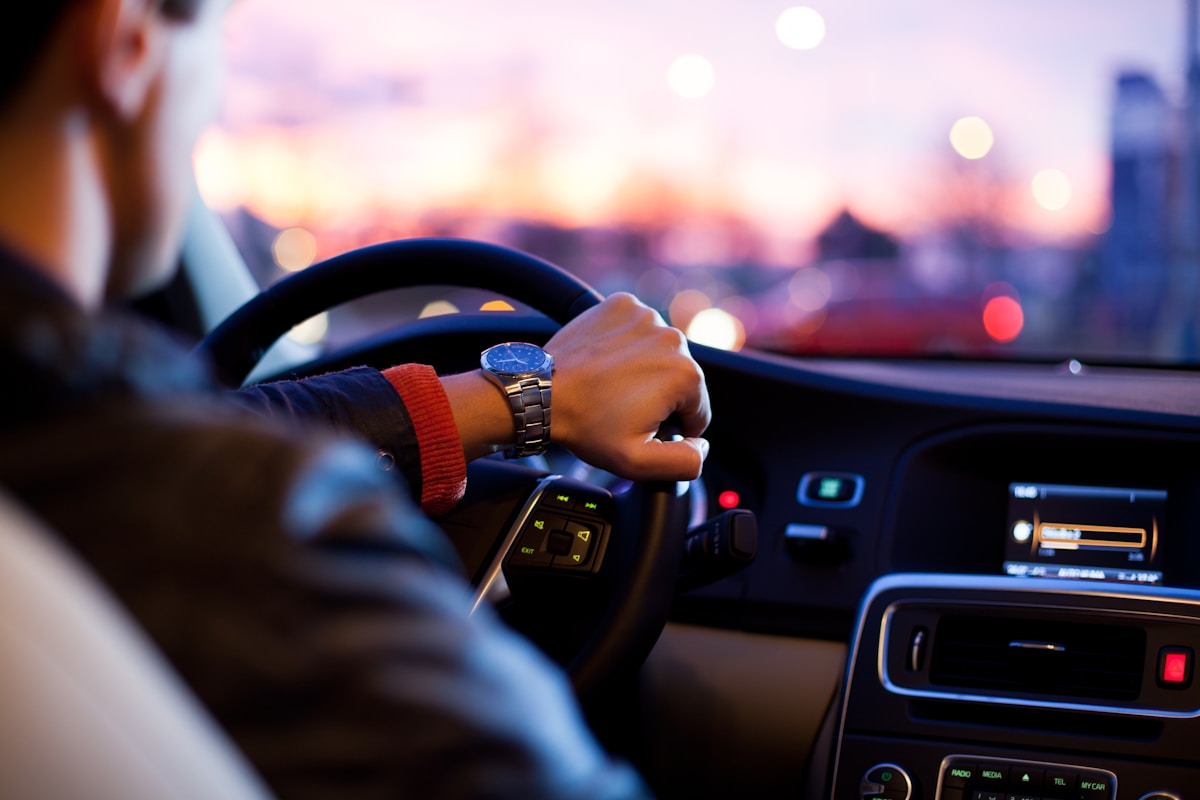
Private Transfers vs Rental Cars: Which Suits NZ Visitors Best?
Renting a car in New Zealand seems like the obvious choice — but for many international visitors, private transfer delivers a safer, more enjoyable, and often cheaper alternative. Here's an honest comparison.
Private Transfers vs Rental Cars: Which Suits NZ Visitors Best?
Every year, hundreds of thousands of international visitors to New Zealand face the same decision shortly after landing. Car hire desks line the arrivals halls. Travel advisors recommend camper vans. Tourism websites feature winding mountain roads and freedom camping imagery. The message is clear: rent a car, drive yourself, experience New Zealand on your own terms.
But a growing number of visitors — particularly those staying at premium lodges, travelling in groups, arriving jet-lagged from long-haul flights, or coming from countries where left-hand driving is unfamiliar — are reaching a different conclusion. Private transfer, they discover, delivers everything the rental car promises with fewer of its headaches and, for many journey types, at comparable or lower total cost.
This guide provides an honest, comprehensive comparison to help you decide which option suits your New Zealand visit best.
The Real Cost of Rental Cars in New Zealand
The headline rental rate is rarely the number you actually pay. Let's break down the full cost of a typical rental car for a couple spending 10 days in New Zealand:
Base rental fee: $70–120 per day for a mid-range vehicle, or $100–180 for a larger SUV suitable for South Island roads. Over 10 days: $700–1,800.
Insurance: Standard rental insurance typically has a $3,000–5,000 excess (the amount you pay in the event of damage). Eliminating this excess requires purchasing additional insurance at $25–45 per day. Over 10 days: $250–450.
Fuel: New Zealand petrol prices sit around $2.30–2.60 per litre in 2026. A 10-day, 2,500km itinerary in an average vehicle consumes approximately 175–225 litres. Fuel cost: $400–585.
Parking: Christchurch CBD, Queenstown, Auckland — paid parking averages $3–8 per hour, $15–30 per day at hotels (though many include parking). Budget $100–200 for the trip.
Tolls: Northern Gateway Toll (Auckland) and other tolled roads add $5–15 across a typical North Island itinerary.
Road service: Breakdown cover, if not included, runs $8–15 per day.
Total realistic cost for 10 days, couple: $1,455–3,050, before any costs associated with damage.
For context, a LandFlight private transfer programme connecting the same major destinations — Auckland, Rotorua, Taupo, Napier, Wellington, Queenstown, Wanaka, Christchurch — would typically cost $1,200–2,400 for a couple across the same 10 days, with all logistics handled, no insurance anxiety, and professional drivers managing every kilometre.
Driving on the Left: A Real Challenge for International Visitors
New Zealand drives on the left side of the road — the same as the United Kingdom, Australia, and Japan, but opposite to North America, most of Europe, and virtually all of South America. For visitors from these countries, the adjustment is not trivial.
In residential areas and motorways, many visitors adapt fairly quickly. The challenges intensify in scenarios that New Zealand presents frequently:
Narrow mountain roads. The Crown Range Road, the Haast Pass, Arthur's Pass, the road to Milford Sound — these are narrow, winding, single-carriageway routes with significant drop-offs and little margin for error. For an experienced local driver they are manageable; for a jet-lagged tourist encountering mountain switchbacks for the first time on the left, they can be genuinely stressful.
Single-lane bridges. New Zealand has hundreds of single-lane bridges, each with priority signage determining which direction yields. To a foreign driver unsure of the conventions, these create anxiety disproportionate to their actual risk.
Rural intersections. The New Zealand road rule for uncontrolled intersections — give way to traffic on your right — is counterintuitive for right-hand-drive visitors, and a frequent cause of near-misses.
Fatigue effects. Most long-haul flights to New Zealand arrive in the morning, having crossed multiple time zones. Jet-lagged drivers on unfamiliar roads in an unfamiliar driving orientation are statistically more likely to have incidents in the first 48–72 hours of a New Zealand visit.
LandFlight drivers are professional, locally experienced, and alert. Every kilometre is their working environment, not an unfamiliar challenge. For visitors who want to enjoy the scenery rather than concentrate on the road, this difference is transformative.
The Wine Tour Problem
New Zealand's wine regions — Marlborough, Hawke's Bay, Wairarapa, Central Otago — are among the most compelling reasons to visit. World-class pinot noir, sauvignon blanc, and syrah grown in some of the planet's most photogenic vineyard landscapes.
The problem with rental cars and wine tours is self-evident: if you're driving, you can't drink. Not responsibly, not legally, and certainly not in the spirit of a wine region visit.
A LandFlight transfer through the Hawke's Bay wine country, with a driver handling navigation while guests taste at Craggy Range, Black Barn, and Trinity Hill, is a fundamentally different experience from a self-driven vineyard crawl where one member of the couple nurses a single glass while watching the others enjoy the cellar door program.
Wine country transfers are one of LandFlight's most popular booking categories, and the reason is simple: our guests can drink what they've come to drink, in the places that produce it, without compromise.
Flexibility: The Rental Car's Main Advantage
Honest comparison demands acknowledging what rental cars do well. The primary advantage is spontaneous flexibility — the ability to stop unexpectedly, change plans on impulse, take an unmarked turning toward an interesting sight, and generally travel without a predetermined schedule.
For backpackers, freedom campers, and budget travellers spending 3–6 weeks covering the country at leisure, rental cars (or campervans) represent excellent value and genuine freedom.
For the specific demographic LandFlight serves — premium lodge guests, corporate travellers, families on complex itineraries, international visitors on condensed schedules — this spontaneous flexibility is less critical than it might appear. Most high-end lodge guests have structured itineraries: meals booked, activities arranged, arrival times communicated to properties. The 'freedom' of a rental car is somewhat theoretical when your lodge expects you at 3pm.
Moreover, LandFlight transfers offer meaningful flexibility within their structure. Our drivers will stop for photographs. We accommodate detours. We can adjust departure times within reason. The difference between LandFlight flexibility and rental car flexibility is smaller than it appears in theory.
Safety: The Underacknowledged Factor
New Zealand's road toll is, unfortunately, high relative to comparable developed nations. Narrow roads, unfamiliar driving conventions, weather variability, and visitor inexperience all contribute. The New Zealand Transport Agency consistently identifies overseas drivers as a significant factor in serious crashes.
For visitors choosing between rental car and private transfer, personal safety deserves explicit consideration. LandFlight drivers are professionally trained, carry all required certifications, drive these roads daily, and have none of the fatigue, jet lag, or orientation challenges that affect international visitors.
For families with children — where a road incident would be catastrophic — the safety argument for professional transfer is particularly compelling. No rental car excess, no navigation stress, and a driver who has driven this road a hundred times.
When Rental Cars Make Clear Sense
Fairness requires clarity about when rental cars win outright:
- Extended independent travel: 3+ weeks covering the country at your own pace, including freedom camping, Coromandel backroads, and flexible exploration.
- Budget travel: Self-driving is cheaper than private transfer for solo travellers or couples on tight budgets who are comfortable driving on the left.
- Campervan itineraries: For travellers wanting the campground experience, self-driving is inherent to the programme.
- Rural exploration: If your itinerary involves following back roads speculatively with no fixed schedule, a rental car is the right tool.
The Verdict
For international visitors to New Zealand staying at premium accommodation, travelling in groups, visiting wine regions, managing complex multi-lodge itineraries, arriving jet-lagged, or prioritising experience quality over budget — private transfer consistently delivers superior value, greater safety, and a better overall journey experience than rental car alternatives.
The numbers often support the switch more than people expect. The experience invariably does.
Compare your specific itinerary with LandFlight's transparent pricing at landflight.co.nz.
About the Author

Priya Sharma
Luxury Travel Writer & Transfer Consultant
Priya writes about New Zealand's luxury travel landscape from Auckland, where she's spent a decade connecting international visitors with the country's premium experiences. Her background in hospitality strategy informs her practical approach to high-end logistics.