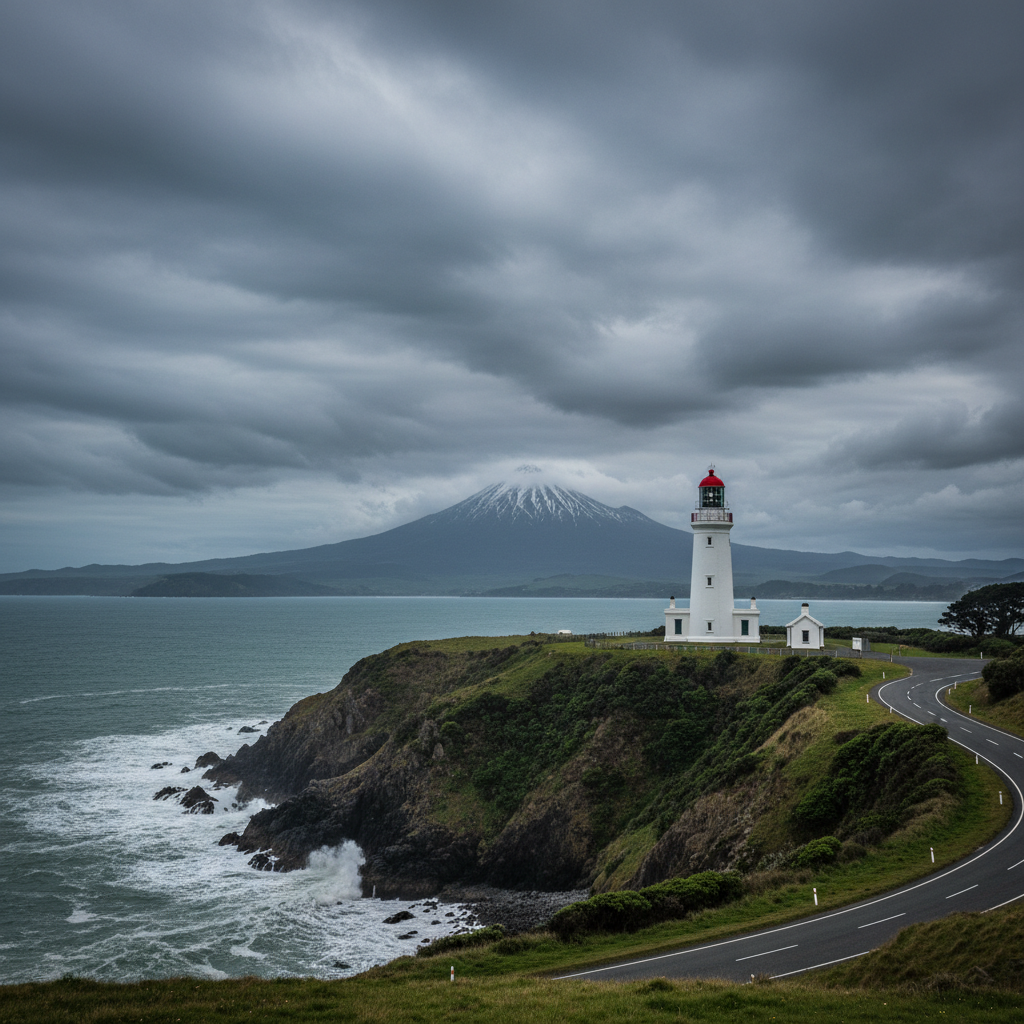
New Plymouth to Wellington Private Transfer: The Coastal Route vs. The Fast Track
New Plymouth to Wellington private transfer options: SH3 coastal (5hrs) vs SH1 inland (4.5hrs). Drive times, route conditions, and when to fly instead.
The New Plymouth to Wellington run splits into two distinct journeys: the SH3 coastal route past Waitotara and Whanganui (4 hours 50 minutes in good conditions), or the inland shortcut via SH3 to Whanganui then SH1 through Palmerston North (4 hours 20 minutes). Both carry complications that don't appear on routing apps.
I've coordinated this transfer dozens of times—corporate clients from Todd Energy headed to Wellington meetings, Taranaki festival-goers returning to the capital, American guests who've finished at a rural property and need city flights. The question isn't just which route is faster. It's whether you want scenery or certainty, and whether you've budgeted for the hidden friction points.
The SH3 Coastal Route: Stunning and Slow
SH3 hugs the coast from Waitotara through to Paekākāriki, delivering views of the Tasman Sea and the Kāpiti Coast that justify the extra thirty minutes. The road surface is generally sound, but this is a winding two-lane highway through farmland and coastal settlements—Pātea, Waverley, Whanganui, Bulls, Sanson—with passing lanes appearing sporadically.
The stretch from Whanganui to Bulls (77km) runs inland through flat dairy country and is the fastest section. South of Levin, SH1 takes over and widens, but you'll hit urban congestion through Paekākāriki and into the Porirua corridor. Budget 5 hours minimum if you're due at Wellington Airport for an onward flight. Add twenty minutes for weekday rush (7–9am, 4–6:30pm).
The coastal route makes sense when time isn't rigid: you're staying in Wellington CBD that night, or your domestic flight's in the late afternoon. It's the scenic option, but not the stress-free one if you're watching a clock.
The SH1 Inland Route: Faster But Not By Much
The faster route cuts inland from Whanganui via SH1 through Palmerston North—wider highway, better maintained, fewer tight corners. You'll shave twenty to thirty minutes, but you'll also hit Palmerston North traffic (the city straddles your path) and the Ngauranga Gorge bottleneck approaching Wellington's northern gateway.
Ngauranga Gorge is the wildcard. This 3km stretch of SH1 into Wellington is regularly congested in both directions during weekday peaks, and crashes close it entirely several times a year. If you're arriving Wellington-side between 7–9am or leaving the capital 4–6:30pm, add fifteen minutes minimum. On a bad day, add forty.
The inland route is my default recommendation for airport pickups or time-sensitive business travel—but only if you're departing New Plymouth by 11am for a 4pm Wellington obligation, or earlier if the forecast includes wind warnings (Wellington Airport closes for strong northerlies, and you'll want buffer time).
Rental Car Reality: Windscreen Chips and One-Way Fees
Rental cars from New Plymouth to Wellington incur one-way fees ($75–150 depending on provider) because Taranaki isn't a high-volume return market. You'll pick up in New Plymouth, battle Egmont Street traffic exiting the city, navigate the route choice yourself, and drop off at Wellington Airport or CBD—then face the chip-in-windscreen conversation.
SH3's coastal section and SH1 through the Manawatū both feature heavy logging truck traffic. Stone chips are common, and rental excess waivers don't always cover windscreen damage below the excess threshold. Budget another $350–500 if you're unlucky.
Fuel stops require planning. New Plymouth, Whanganui, and Levin are your reliable service stations. The 80km stretch from Waitotara to Whanganui has limited options, and Paekākāriki's southern approaches into Wellington offer expensive fuel only.
Air New Zealand: The Expensive Certainty
Air New Zealand runs four to six flights daily from New Plymouth to Wellington (NPL–WLG), flight time 55 minutes, priced $120–280 one-way depending on booking window. Add 90 minutes each side for airport processes, and you're at 3 hours 10 minutes door-to-door if you're staying in Wellington CBD.
Flying makes sense when:
- You're travelling solo with minimal luggage
- Your Wellington commitment is unmovable (court appearance, board meeting, international connection)
- Weather has closed SH3 or you're facing verified delays
It doesn't make sense when you're a group of three or four, or when you're carrying ski gear, golf clubs, or sample cases. Baggage fees ($20–70 per item) and airport parking in New Plymouth ($15/day uncovered, $25/day covered) erode the time advantage quickly.
When Private Transfer Becomes the Maths Answer
A private transfer from New Plymouth to Wellington costs approximately $1,400–1,650 depending on vehicle class (premium sedan vs 7-seater) and whether you're requesting stops. For a group of four, that's $350–410 per person—comparable to airfares once you've added baggage and taxis.
The economics shift further when you factor:
- Direct routing to specific Wellington addresses (Oriental Bay Airbnb, Thorndon hotel, Seatoun holiday home—not just airport or CBD)
- Luggage capacity without fees (ski gear, wine purchases, conference materials)
- Flexible departure not locked to flight schedules
- Driver familiarity with real-time conditions (SH3 slip closure, Ngauranga delays, Wellington wind disruption)
We've run this route for Taranaki business owners headed to capital meetings, extended families shifting between North Island properties, and international guests who've stayed at rural Taranaki accommodations and need Wellington CBD hotels. The common thread: they're optimising for experience and certainty, not just cost per kilometre.
If you're connecting to Wellington to Queenstown or Auckland to New Plymouth legs, coordinating private transfers eliminates the rental car swap and airport wait multiplication.
Road Condition Variables You Won't Find on Google
SH3 coastal closures happen two to three times annually—usually slips near Waitotara or south of Pātea after heavy rain. NZTA updates are posted but not always reflected in routing apps for 6–12 hours. A private driver monitors these and reroutes inland automatically.
Wind warnings affect the Wellington approaches more than the Taranaki end. Ngauranga Gorge and the Johnsonville corridor funnel northerlies viciously—campervans and high-sided vehicles get blown across lanes. If you're in a rental sedan, you'll feel it but manage. If you're in an unfamiliar vehicle on an unfamiliar road, it's unnerving.
Freight traffic peaks midweek—Tuesdays through Thursdays see the heaviest logging and dairy tanker movements on both SH3 and SH1. Passing opportunities diminish, and your Google estimate stretches.
The Soft Calculus of Not Driving
I've spoken to dozens of travellers who've completed this drive and described it as “fine, but longer than expected” or “stressful coming into Wellington.” The route isn't difficult—it's just relentless. Five hours of concentration, fuel planning, and decision-making (which café stop, which lane, did I miss the turn for the hotel?) when you'd rather be answering emails or watching the coast.
Private transfer puts a professional between you and those micro-decisions. You'll still see the coast if you want (drivers can take SH3 on request), but you'll do it from the back seat with laptop open or head resting. Arrival in Wellington is directly to your door—no parking search in Thorndon, no airport shuttle wait, no rental return queue.
If you're weighing options for New Plymouth to Wellington and the variables above sound familiar, request a quote with your specific timing and destination address. We'll route it properly and give you the fixed cost—no surge pricing, no excess waiver anxiety, no missed turn into Ngauranga.
Sarah Tane Based in Hamilton
Sarah has logged over 200,000km on North Island highways coordinating lodge transfers and corporate travel. She knows every petrol station, road condition quirk, and which routes actually take longer than Google claims.
About the Author

Sarah Tane
North Island Specialist & Lodge Liaison
Sarah has driven every major North Island corridor multiple times, usually with a lodge check-in time to meet. She writes about the routes most travellers navigate once—and the details that matter when you do.