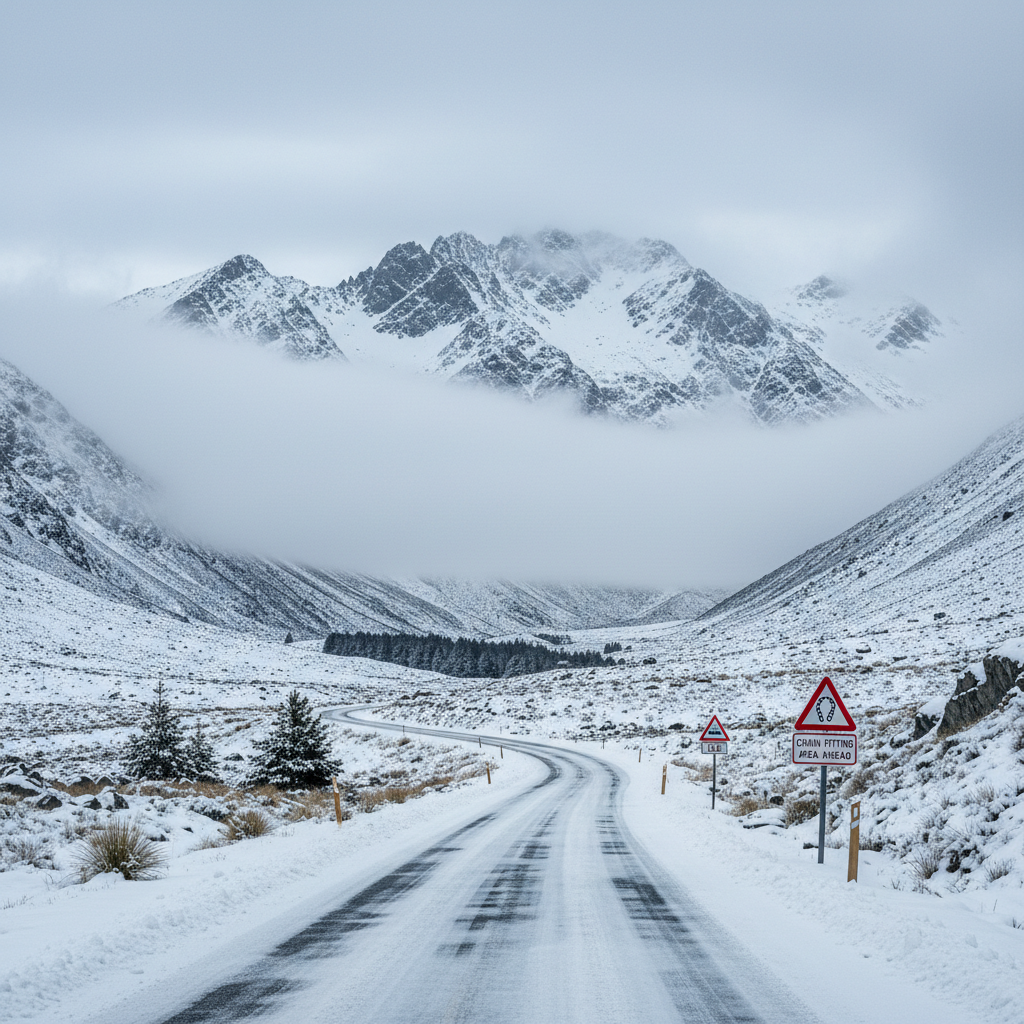
Are the Passes Open in Winter? Your Guide to New Zealand's Alpine Road Status
Are NZ passes open in winter? Real-time status for Crown Range, Arthur's Pass, Lewis Pass, Lindis Pass & Haast Pass with closure patterns and alternatives.
It's the question every winter traveller to New Zealand eventually asks, usually while staring at a route planner the night before departure: are the passes actually open? The short answer is "probably, but check this morning." The longer answer requires understanding which passes close, how often, and what your alternatives look like when they do.
New Zealand's alpine passes don't follow European or North American patterns. We don't close roads for the entire winter season. Instead, we have temporary closures—sometimes for two hours during a snowfall, sometimes for two days after a proper dump. The uncertainty is the hard part for trip planning.
Which South Island Passes Close in Winter?
Five passes account for most winter closure anxiety:
Crown Range Road (SH89A) between Queenstown and Wanaka closes most frequently. At 1,121 metres, it's New Zealand's highest paved road and gets hit first when cold fronts sweep up from the south. Expect 5-12 closure days per winter, usually June through August. Closures often happen overnight or early morning as ice forms. The alternative—SH6 via Cromwell—adds 70 minutes but remains open in all but the most severe weather.
Arthur's Pass (SH73) at 920 metres is the main link between Christchurch and the West Coast. It closes less often than Crown Range—typically 2-6 days per winter—but when it does, there's no quick alternative. The detour via Lewis Pass adds three hours. Closures here usually follow heavy snow or avalanche risk, not just ice.
Porters Pass (SH73) sits slightly lower at 945 metres but is exposed to strong nor'westers. It closes more for wind and ice than snow depth, often in combination with Arthur's Pass closures since they're on the same highway.
Lewis Pass (SH7) at 864 metres is generally the most reliable winter option between Canterbury and the West Coast. Still, expect 1-4 closure days in a typical winter, usually during active snowfall rather than afterwards.
Lindis Pass (SH8) between Cromwell and Omarama hits 971 metres and closes occasionally—perhaps 2-5 days per winter. The exposure and black ice are the issues more than snow depth.
The Passes That Stay Open
Haast Pass (SH6) at 563 metres almost never closes for snow. It's too low and too close to the West Coast's maritime influence. You'll drive through rain, not snow, even in July. I've crossed it in the middle of winter storms without issue.
Buller Gorge (SH6) stays open. So does SH1 through the Hunua Ranges south of Auckland (which isn't alpine but does get fog closures).
Milford Road (SH94) is a special case. It closes frequently in winter—often multiple times per week—but that's due to avalanche control work rather than impassable conditions. The closure windows are usually predictable: early morning while crews do control work, reopening by mid-morning. Check the Milford Road status page before you commit to a journey in or out.
How to Check Pass Status in Real Time
Three sources matter:
NZTA Journey Planner (journeys.nzta.govt.nz) is the official word. Updated in real time, includes estimated reopening times when known. Check the specific highway number, not just the pass name.
MetService Mountain Weather gives you the forecast that determines closures. If they're calling for snow above 600m with strong winds overnight, Crown Range will likely close by dawn.
Local accommodation hosts often know before official sources update. If you're staying at a lodge in Queenstown or Wanaka, ask the front desk for their read on conditions before departing at 6am.
Winter Closure Patterns: What the Data Shows
After tracking pass closures for eight seasons, some patterns emerge:
Crown Range tends to close overnight and reopen by late morning once graders have cleared ice. If it's still closed at noon, assume it'll stay shut until the next day.
Arthur's Pass closures are more binary: either a quick 2-3 hour closure during active snow, or a full-day closure while avalanche risk is assessed. If it closes after 2pm, it rarely reopens the same day.
Lindis Pass often closes in the afternoon as westerly winds strengthen, even if morning conditions were clear.
The worst closure combinations happen when southerly storms hit multiple passes simultaneously. When Crown Range, Arthur's Pass, and Lindis are all closed—which happens 1-3 times per winter—route options become severely constrained.
What Closure Actually Means for Your Journey
If you're travelling Queenstown to Wanaka and Crown Range closes, the SH6 alternative via Cromwell adds about 70 minutes. Annoying, but workable.
If you're travelling Christchurch to Hokitika and Arthur's Pass closes with no Lewis Pass alternative, you're facing either a three-hour detour north or an overnight delay. That's trip-altering.
The cascade effect is what catches international visitors. Your Queenstown-Christchurch rental car drop-off is booked for 4pm. Crown Range and Lindis are both closed. Suddenly you're looking at SH6 to Haast, then up the West Coast to Greymouth, then across Lewis Pass—adding four hours to what should have been a five-hour drive. You'll miss your flight connection.
The Rental Car vs. Transfer Calculation in Winter
Rental car companies don't refund you for weather delays. If a pass closure adds a night of accommodation or causes you to miss a flight, that's your cost to absorb. They also don't permit snow chains on most vehicles without prior arrangement, and they'll charge you if you damage the car driving in winter conditions outside their terms.
A private transfer service absorbs that risk differently. If Crown Range closes while you're mid-journey from Queenstown to Huka Lodge, the driver reroutes via Cromwell without consulting you—it's their problem to solve, not yours. If Arthur's Pass closes overnight and you need to get from Christchurch to Franz Josef the next morning, a professional service will have already checked conditions at 5am and built the delay into departure time.
The cost difference narrows considerably when you factor in winter risk: rental car + chains + fuel + potential overnight accommodation + stress versus one fixed transfer price with someone who's driven the route in snow before.
When to Build in Buffer Time
If your trip includes any of these scenarios in winter, add contingency time:
- Flying into Queenstown, out of Christchurch within 48 hours (Arthur's Pass or Lindis could close)
- Any West Coast itinerary dependent on same-day pass crossings
- Milford Sound day trips from Queenstown or Te Anau (road closure windows compress your time at the Sound)
- Connecting to international flights in Auckland or Christchurch after crossing alpine passes the same day
A good rule: if your route crosses Crown Range, Arthur's Pass, or Lindis in winter and you have a flight connection within six hours of planned arrival, you're taking on meaningful risk.
July and August: Peak Closure Months
June sees the first serious closures but roads are often still drivable with caution. July and August are peak winter—this is when multi-day closures happen, when multiple passes close simultaneously, when avalanche risk keeps Arthur's Pass shut for 36 hours straight.
If you're travelling in these months, check conditions the morning of departure, not the night before. Conditions change overnight. A pass that was clear at 8pm can be closed by 6am after a southerly front moved through faster than forecast.
The Bottom Line
New Zealand's alpine passes are open most of the time, even in winter. But "most of the time" isn't certainty, and the exceptions can reshape your entire journey. Check NZTA before you leave. Know your alternative routes. And if your trip includes tight connections or you're uncomfortable driving in snow, consider whether the cost of a professional transfer might actually be cheaper than the risk you're carrying with a rental car.
For winter routes across Crown Range, Arthur's Pass, or anywhere else the weather might have a vote in your plans, get a quote and let someone else watch the forecast at 5am.
About the Author

James Whitfield
Senior Driver & South Island Route Specialist
James has driven every major South Island route for the past twelve years, specialising in alpine access and terrain logistics. He advises on winter transfers and lodge positioning across Canterbury and Otago.